Author name: risnakarumarathodika@gmail.com

Brand Online
Uncategorized

How to Build a Strong Brand Online: A Complete Guide

Your brand online is more than a logo or some colors. It is the entire experience people have with your business. A strong brand online helps build trust with people makes customers loyal and helps your business stand out from all the others. Here is how you can create a brand that people will remember and like. Brand Online 1. Figure Out What Your Brand Is About First you need to answer some questions: * What is your business trying to do? * What are the values that guide your business? * Who are the people you are trying to help? * What problems do you help solve? When you have answers to these questions you have a strong foundation for your brand. 2. Create a Logo. Look That People Will Remember You need to choose: * A logo that looks professional * Colors that fit your brand * Fonts that you use all the time * Pictures that are high quality Use these things on your website and social media all the time. 3. Find Your Brands Voice Your tone should be like the people you are talking to. For example: * You can be friendly * You can be professional * You can inspire people * You can teach people things * You can be funny When you are consistent people know it is you away. 4. Build a Website That Looks Professional Your website should: * Load fast * Work well on phones * Be easy to navigate * Have your contact information * Have things that people say about you * Be secure When your website looks professional people trust you more. 5. Make Content That Helps People Create things like blog posts, videos, guides and social media posts that answer peoples questions and help them solve problems. When you make content people think you are an expert in your field. 6. Always Be Consistent Use the same: * Logo * Colors * Message * media * Website * Newsletters When you are consistent people get used to you. Trust you. 7. Ask People for Reviews reviews help people trust you and want to buy from you. Ask people who like your business to leave a review and always respond to what people say. 8. Build Relationships With People Talk to people by responding to comments answering questions and joining conversations in your field. People like brands that’re real and easy to talk to. 9. Pay Attention to What People Say About You Look at what people say about your brand what they write in reviews and what they tell you. Fix problems away and thank people when they say something good, about you.   Building a brand online takes time but it is worth it. When you are consistent help people and care about your customers you can build a brand that people know, trust and tell others about. Remember, building a brand online is a long-term plan that helps your business grow in a good way. This complete guide explains how to define your brand online identity, create a consistent visual presence, develop valuable content, engage with your audience on social media, optimize your website for SEO, and build long-term customer loyalty. Whether you’re a startup, freelancer, or established business, these proven branding strategies will help you stand out from the competition and create a lasting online presence. A strong brand online helps your business stand out, build customer trust, and drive long-term growth. In this guide, you’ll discover practical strategies to create a memorable brand identity, develop a consistent online presence, produce engaging content, leverage SMM , and improve your visibility through SEO. Whether you’re launching a new business or strengthening an existing brand, these actionable tips will help you build a powerful online presence that attracts and retains customers.  
Uncategorized

10 Tools Every Beginner Needs to Grow an Online Business

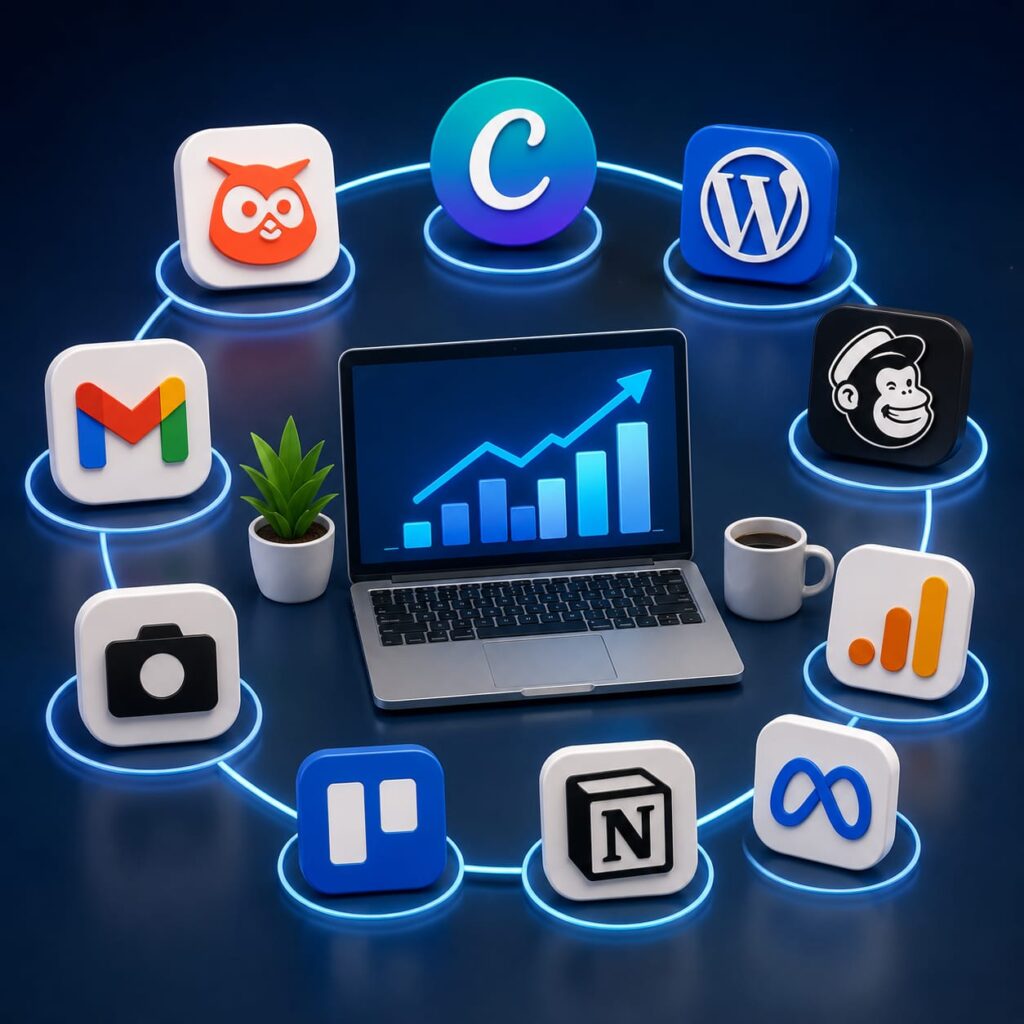
Starting an online business can feel really tough. There are thousands of tools out there.. You do not need to spend a lot on software to succeed. Here are ten essential tools. They help beginners with productivity, marketing, communication and making content. 1. Canva Canva helps you make looking graphics. You can create media posts, presentations and marketing materials. You do not need design experience. 2. Google Workspace Google Docs, Sheets, Drive and Gmail are helpful. They help you organize files work with teams and manage business communication. 3. Trello Trello is a tool. It helps you track tasks, plan content and manage work. 4. Grammarly Grammarly checks grammar, spelling and punctuation. It helps you write clearly. You can create content. 5. ChatGPT ChatGPT can help with ideas writing content and customer support. It can even help with coding and research. 6. Google Analytics Google Analytics helps website owners. It shows them how visitors behave, where traffic comes from and how well conversions perform. 7. Google Search Console Search Console monitors your website. It checks indexing, keyword rankings and technical SEO issues. 8. Buffer Buffer helps you schedule media posts. You can post on platforms from one dashboard. 9. Mailchimp Mailchimp helps you build email lists. You can create newsletters and automate email marketing. 10. Notion Notion is a workspace. It combines note-taking, project management and document storage. Tips, for Choosing the Right Tools * Start with plans. * Learn one tool at a time. * Do not pay for features you do not need. * Choose tools that work together. The right tools can save time. They can improve productivity. They can help beginners build online businesses. Start with a tools. Master them. Then expand as your business grows. A strong online brand helps your business stand out, build customer trust, and drive long-term growth. In this guide, you’ll discover practical strategies to create a memorable brand identity, develop a consistent online presence, produce engaging content, leverage social media, and improve your visibility through SEO. Whether you’re launching a new business or strengthening an existing brand, these actionable tips will help you build a powerful online presence that attracts and retains customers. Starting an online business is easier with the right tools. In this guide, discover 10 essential tools every beginner should use to build a professional online presence, create engaging content, manage social media, improve SEO, communicate with customers, and track business growth. Whether you’re an entrepreneur, freelancer, or small business owner, these beginner-friendly tools can help you save time, increase productivity, and grow your online business with confidence. Discover the 10 essential tools every beginner needs to grow an online business successfully. From website building and content creation to SEO, email marketing, social media management, analytics, and customer communication, these tools help simplify daily tasks and improve productivity. Whether you’re starting a small business, freelancing, or launching an online store, choosing the right digital tools can save time, attract more customers, and support long-term growth. Learn which beginner-friendly platforms offer the best value and how they can help you build a strong online presence, increase brand visibility, and achieve your business goals with confidence. Growing an online business requires the right strategy, consistent effort, and smart digital tools. By focusing on SEO, social media marketing, high-quality content, email marketing, and customer engagement, you can increase your brand visibility and attract more potential customers. Whether you’re a beginner or an entrepreneur looking to scale, using the right techniques will help you build trust, generate leads, boost sales, and achieve sustainable business growth in today’s competitive digital marketplace. Online Business is the process of selling products or services over the internet using websites, social media, and digital marketing to reach customers, increase sales, and grow a brand.   Online Business Click here

Uncategorized

Social Media Marketing Tips for Businesses: A Complete Guide

 Social Media Marketing Social Media  is a powerful tool for small businesses. It helps you reach customers build trust and increase sales. You can use platforms like Facebook, Instagram, LinkedIn, TikTok and X to grow your business. However just posting content every day is not enough. You need a plan consistent posting and to understand your audience. In this guide you’ll learn social media marketing tips to help your small business grow.1. Know Your Target Audience Before creating content you need to know who your ideal customers are. Think about their: Age Where they live What they like What they do Challenges they face Favorite social media platforms When you understand your audience you can create content that solves their problems and grabs their attention. 2. Choose the Right Platforms You don’t need to be on every media platform. Facebook is great for businesses and community engagement. Instagram is ideal for brands, restaurants, fashion and lifestyle. LinkedIn is best for B2B companies and professional services. TikTok is perfect for entertaining short-form videos. Pinterest is excellent for DIY, home decor, recipes and design. Focus on the platforms where your customers spend most of their time. 3. Create Valuable Content Your content should educate, entertain or inspire your audience. Examples include: * How-to guides * Behind-the-scenes videos * Customer testimonials * Product demonstrations * Industry tips * Success stories * Frequently asked questions Don’t make every post a sales pitch. 4. Maintain a Consistent Posting Schedule Consistency helps build trust and keeps your brand visible. A simple posting schedule might include: * Monday: post * Wednesday: Customer story * Friday: Product showcase * Sunday: Behind-the-scenes content Using a content calendar makes planning easier. 5. Use High-Quality Images and Videos Visual content gets engagement than plain text. Invest in: * Professional product photos * videos * Reels * Infographics * Branded graphics smartphone cameras can take great photos, with good lighting. 6. Engage With Your Audience media is a two-way conversation. Respond to: * Comments * messages * Reviews * Mentions Engaging with your audience builds customer loyalty and trust. 7. Track Your Performance Monitor metrics like: * Reach * Engagement rate * Website clicks * Followers gained * Conversion rate Use these insights to improve content. Common Mistakes to Avoid * Posting inconsistently * Ignoring comments * Using low-quality visuals * Buying followers * Posting promotional content Social media marketing doesn’t require a huge budget. With consistency, valuable content and genuine engagement small businesses can build an audience and generate long-term growth. Start with one or two platforms focus on helping your audience and refine your strategy based on results. Social Media Marketing (SMM) is the process of promoting your business, products, or services through social media platforms like Facebook, Instagram, LinkedIn, and X. It helps increase brand awareness, engage with your target audience, drive website traffic, generate leads, and boost sales through strategic content, advertising, and community engagement. Social Media Marketing is a powerful digital marketing strategy that helps businesses connect with their audience, build brand trust, and grow online. By creating engaging content and running targeted campaigns, businesses can increase visibility, attract potential customers, and achieve long-term growth across social media platforms. Discover practical social media marketing tips to grow your brand, increase engagement, and reach the right audience. Learn how to create valuable content, post consistently, use hashtags effectively, and analyze performance to improve your marketing results across all major social media platforms. Social media marketing is one of the most effective ways to build your online presence and connect with your audience. By sharing high-quality content, engaging with followers, and using data-driven strategies, businesses can increase brand awareness, generate quality leads, and achieve long-term growth across social media platforms. Social media growth is the process of increasing your brand’s reach, engagement, and follower base through consistent, high-quality content and strategic marketing.  Click here Click here

Scroll to Top